In the world of garment care, the standing steamer has revolutionized how we approach wrinkle removal, offering a gentler, quicker, and often more effective alternative to traditional ironing. Whether you’re a fashion enthusiast, a professional tailor, or simply seeking an easier way to refresh your wardrobe, understanding the nuances of these appliances is key. Among the most crucial distinctions lies in their structural design: single pole versus double pole. This seemingly minor detail profoundly impacts the steamer’s stability, versatility, and overall user experience. Selecting the right design can be the difference between effortless garment care and a frustrating battle with a wobbling appliance.
What is a Standing Garment Steamer?
A standing garment steamer is an appliance designed to remove wrinkles and refresh fabrics using a continuous flow of hot steam. Unlike a traditional iron that uses direct heat and pressure, a steamer works by relaxing the fibers of the fabric, allowing wrinkles to fall out naturally without direct contact. This makes them ideal for delicate materials like silk, chiffon, and lace, as well as for garments with intricate details, sequins, or prints that irons might damage. Their primary advantage lies in their speed and convenience; you can typically steam a garment in minutes, often without needing an ironing board, saving both time and effort. Many modern steamers also offer sanitizing benefits, killing bacteria and removing odors from clothes, upholstery, and drapes.
Types of Standing Garment Steamers: A Focus on Pole Design
When exploring standing garment steamers, one of the most significant design variations you’ll encounter is the number of support poles. This structural choice directly influences the unit’s stability, the ease with which you can steam different garments, and its overall footprint. Each design caters to distinct needs and preferences, making it essential to understand their individual characteristics.
Single Pole Design
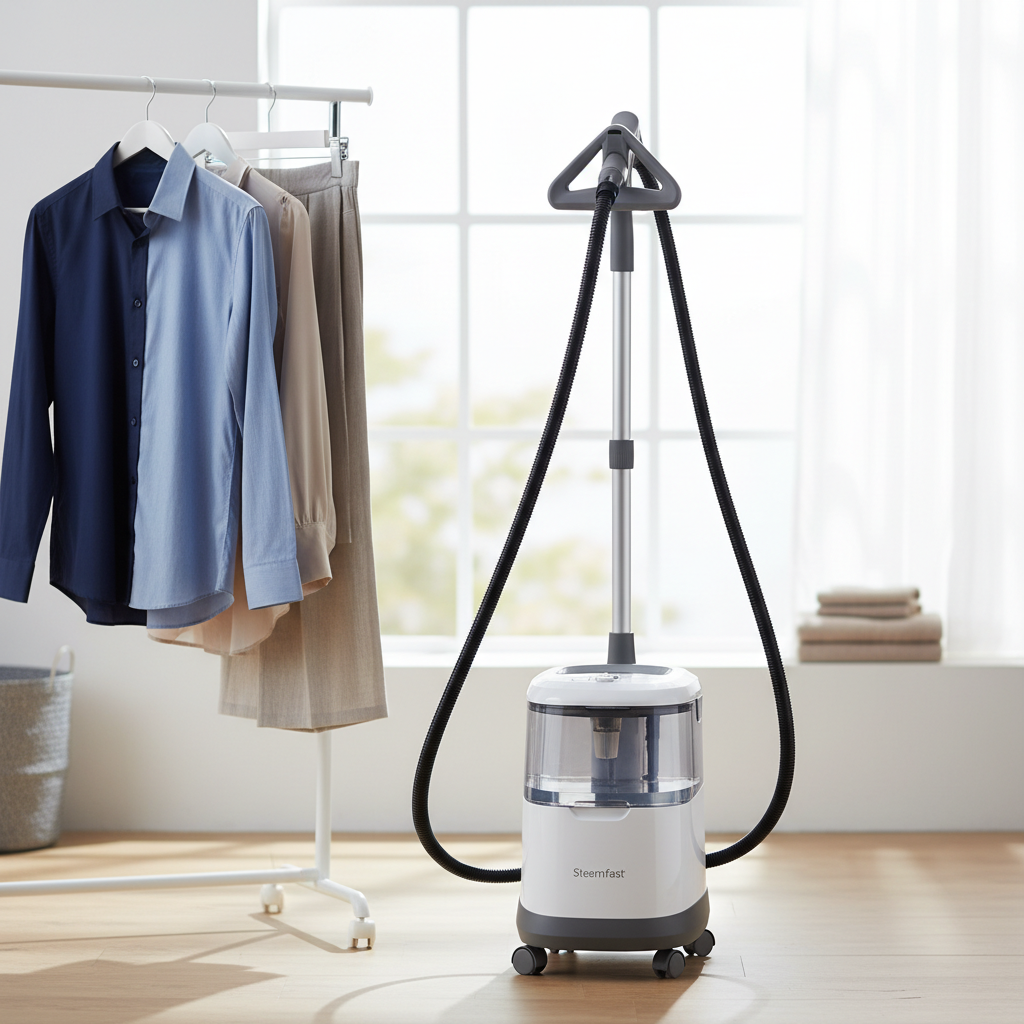
Single pole standing garment steamers are characterized by a single, central telescopic pole extending from the base. This design is often favored for its simplicity and compact nature. These steamers typically feature a basic hanger hook at the top, sometimes integrated with a simple garment clip.
- Pros:
- Portability and Storage: Their lightweight and slender design makes them highly portable and easy to store in smaller spaces, perfect for apartments or infrequent use.
- Affordability: Generally, single pole models are more budget-friendly, making them an accessible entry point into garment steaming.
- Quick Set-Up: Simple assembly and breakdown make them convenient for quick steaming tasks.
- Cons:
- Limited Stability: The primary drawback is stability. With only one point of support, these units can wobble or tip over, especially when steaming heavier garments or if you pull on the fabric too firmly.
- Less Garment Support: The basic hanger may not provide adequate support for bulky items like coats or suits, making it harder to achieve crisp results.
- Hands-On Steaming: You often need one hand to hold the garment taut while steaming with the other, reducing convenience.
|
Our Picks for the Best Standing garment steamer in 2026
As an Amazon Associate I earn from qualifying purchases.
|
||
| Num | Product | Action |
|---|---|---|
| 1 | SALAV GS18-DJ Standing Garment Steamer with Roll Wheels for Easy Movement, 1.8L Water Tank for 1 Hour Continuous Steaming, Adjustable Pole for Storage, Includes Descaler Packet, 1500 watts |

|
| 2 | Pure Enrichment PureSteam XL Standing Fabric Steamer - Professional Wrinkle Remover Heats in 45 Seconds; 1/2-Gallon Tank for 1 Hour of Steaming; Easy-Roll Wheels, Garment Hanger, & Fabric Brush |
|
| 3 | Jiffy Steamer J-2000 Jiffy Garment Steamer with Plastic Steam Head, 120 Volt, Beige |
|
| 4 | SALAV® Heavy Duty Smart Auto Shut-off Commercial Full-Size Garment Steamer, Beeping Alert when Water Runs out, Foot Pedal Control, XL 3L (101.5 oz) Tank, 1800 watts, 90+min of Continuous Steam, Navy |
|
| 5 | Garment Steamer for Clothes Standing, 1500W Efficient Clothes Steamer Standing with Wheels, Professional 58OZ Water Tank for Continuous Steaming, Fast Heating Wrinkle Remover |
|
| 6 | Upright Steamer for Clothes 1350W Turbo Boiler Standing Garment Steamer 1.6L Water Tank 1h Continuous Steam Flat&Hanging Ironing Double Retractable Rod 10 Modes 30s Fast Preheat for all Fabrics |
|
| 7 | SALAV GS18 Full-Size Clothes Steamer - 1500W Power, 1.8L Water Tank, 60-Min Garment Steam, Iron Clothing, Adjustable Pole & Wheels for Easy Storage, Professional Standing Steamer for Clothes, White |
|
| 8 | SALAV Heavy Duty Commercial Full-Size Garment Steamer with Foot Pedals and Extra Large 3L (101.5 oz) Water Tank, 1800 watts of Poweful Steam (Navy) |
|
| 9 | SALAV Heavy Duty Commercial Full-Size Garment Steamer with Foot Pedals and Extra Large 3L (101.5 oz) Water Tank, 1800 watts, 90+min of Continuous Steam (White) |
|
| 10 | True & Tidy Heavy Duty Commercial Full Size Standing Garment Steamer for Clothes with Extra Large 3L (101 oz) Water Tank for 90+ mins of Steam Time, 1800 watts of Powerful Steam, 3 Settings, Gray |
|
Double Pole Design
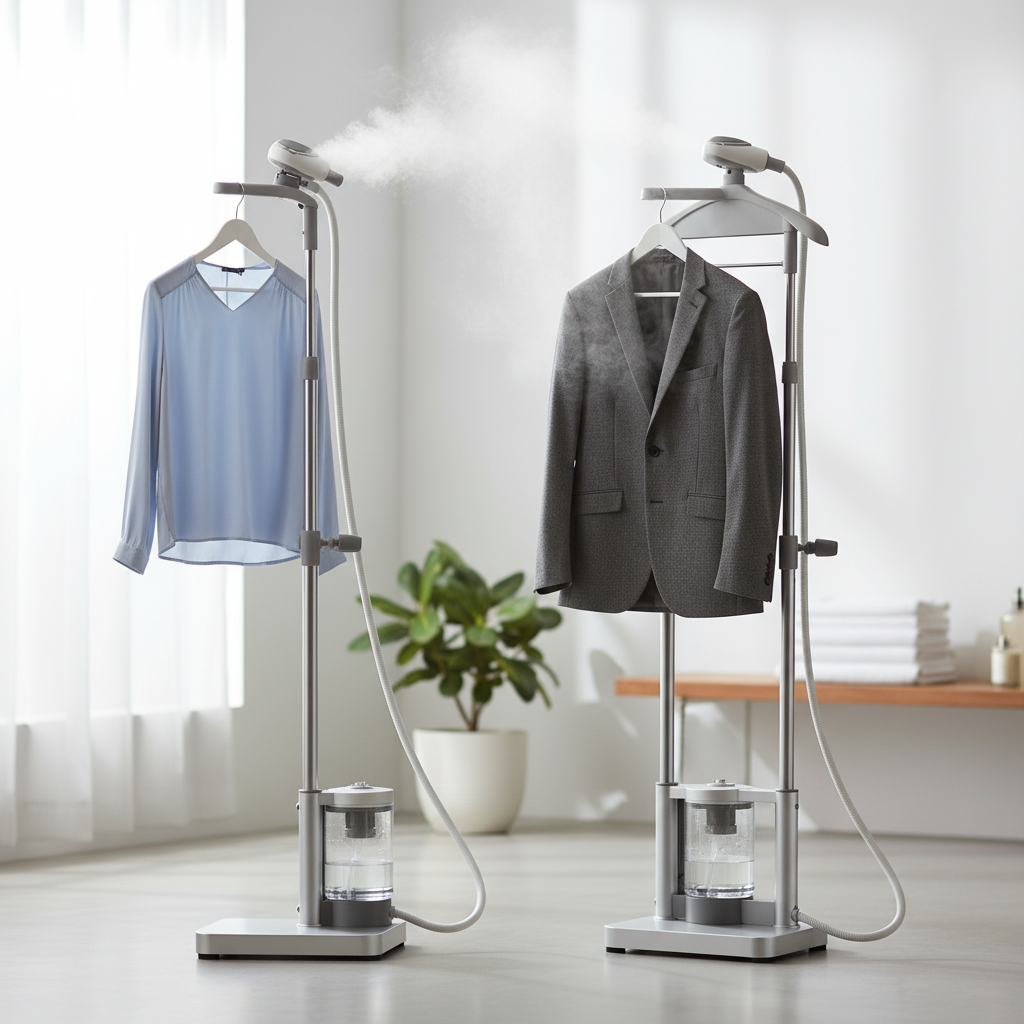
Double pole standing garment steamers feature two parallel telescopic poles extending from the base, often connected by a horizontal crossbar at the top. This robust design is engineered for enhanced stability and greater garment support. Many double pole models incorporate more sophisticated hanger systems, sometimes including pant clips, shoulder shapers, or even a built-in pressing pad.
- Pros:
- Superior Stability: The dual-pole structure provides a much more stable foundation, significantly reducing wobbling and the risk of tipping, even with heavy garments.
- Enhanced Garment Support: The integrated, wider hanger system allows garments to hang more naturally and securely, often facilitating hands-free steaming.
- Versatility: Ideal for steaming a wide range of fabrics, from delicate silks to heavy suits, coats, and even curtains. The extra stability allows for more precise tensioning of fabric.
- Durability: The more robust construction often translates to greater overall durability and longevity.
- Cons:
- Bulkier and Less Portable: Their larger footprint and heavier build make them less portable and require more storage space.
- Higher Cost: Double pole steamers generally come with a higher price tag due to the additional materials and more complex design.
- Longer Set-Up (Slightly): While still simple, they might take a moment longer to set up or adjust compared to their single-pole counterparts.
Comparison Table of Popular Standing Garment Steamer Designs
Understanding the core differences between single and double pole designs is crucial for making an informed decision. This table provides a quick overview of how these two configurations stack up against each other across key attributes.
| Feature | Single Pole Design | Double Pole Design |
|---|---|---|
| Stability | Moderate; prone to wobbling with heavy items | Excellent; very stable, minimal wobbling |
| Garment Support | Basic hanger hook; less ideal for bulky items | Robust hanger system, often with clips/attachments |
| Portability | High; lightweight, easy to move | Low; bulkier, heavier, less convenient for travel |
| Storage Space | Minimal; compact, easy to store | Moderate to large; requires more dedicated space |
| Ideal Use | Light, everyday garments; quick touch-ups; travel | Heavy garments, suits, drapes, upholstery; frequent use |
| Price Range | Generally lower | Generally higher |
| Ease of Hands-Free Use | Limited; often requires manual garment holding | High; garments hang securely for hands-free steaming |
Buying Guide: How to Choose the Right Standing Garment Steamer
Choosing the perfect standing garment steamer involves more than just picking the first model you see. It’s about aligning the appliance’s features with your specific needs, ensuring long-term satisfaction and efficient wrinkle removal. The single vs. double pole debate sits at the heart of this decision.
Identify Your Needs
Before delving into specifications, take a moment to assess your primary usage patterns. This self-assessment will guide your choice towards a steamer that truly serves your purpose.
- Daily Ironing or Occasional Touch-Ups? If you only need to refresh a few light garments occasionally, a compact and portable single pole steamer might suffice. For daily use, larger quantities, or a professional setting, the stability and capacity of a double pole model will be invaluable.
- Steaming Large Quantities or Heavy Fabrics? If you regularly steam suits, coats, drapes, upholstery, or large batches of clothing, the superior stability and garment support of a double pole steamer are non-negotiable. It allows for more precise and efficient handling of heavier materials without constant concern for tipping.
- Variety of Fabrics? Do you primarily steam delicate blouses and dresses, or do you also tackle sturdy cottons, linens, and wool? A double pole steamer provides the necessary tension and support for a wider range of fabric weights.
- Space and Portability Requirements? Consider your living space. If storage is tight or you need to move the steamer between rooms frequently, a single pole’s compactness is a definite advantage. If the steamer will have a dedicated spot, a double pole’s larger footprint is less of an issue.
Factors to Consider
Beyond the pole design, several other elements contribute to a steamer’s performance and suitability.
- Power and Heating Speed: Higher wattage (1500W-2000W) generally means faster heat-up times and stronger, more consistent steam output. This is crucial for tackling stubborn wrinkles efficiently.
- Tank Capacity and Continuous Ironing Time: A larger water tank means longer continuous steaming sessions before refilling. For extensive steaming, a tank capacity of 1.5 to 2.5 liters is ideal, offering 45-90 minutes of use.
- Steam Pressure: While less common to see specific pressure ratings, a powerful pump helps deliver steam deeply into fabrics. Look for models with “continuous steam” features and multiple steam settings.
- Safety Features: Auto shut-off when the water tank is empty or when the unit overheats is a vital safety feature. A cool-touch hose and a sturdy base also contribute to safe operation.
- Durability and Material Quality: Look for steamers with high-quality components, such as stainless steel steam plates and robust hose materials. Read reviews regarding longevity.
- Brand and User Reviews: Reputable brands often offer better warranties and customer support. User reviews provide real-world insights into a product’s performance and reliability.
- Accessories: Many steamers come with attachments like fabric brushes for lint removal, creasing tools for sharp pleats, and specialized hangers. A double pole steamer typically offers a more comprehensive set of garment support accessories.
Budget
Your budget will inevitably play a role in your decision. Single pole steamers are typically more affordable, ranging from $50 to $100, making them an excellent choice for casual users or those on a tight budget. Double pole models, with their enhanced stability and features, usually fall into the $100 to $250 range, representing a worthwhile investment for frequent users, larger households, or those steaming heavier garments regularly. Investing a little more upfront for a double pole steamer can save you frustration and potential damage to your clothes in the long run if your needs align with its advantages.
Top Best Standing Garment Steamers: Finding Your Perfect Match
While specific product recommendations are best made after direct testing, we can highlight the characteristics that define the best steamers in each category. For single pole designs, top models excel in portability, rapid heat-up, and consistent steam for light fabrics, often featuring smart, collapsible designs for easy storage. They are lauded for their convenience in quick garment refreshes.
For double pole designs, the best standing garment steamers are those that offer unwavering stability, robust garment support systems (often including padded hangers and trouser clamps), and powerful, continuous steam suitable for even the heaviest fabrics like denim, wool, and drapes. Look for models with large water tanks, multiple steam settings, and durable construction to withstand frequent, demanding use. These professional-grade machines provide superior control and efficiency, making them the preferred choice for comprehensive garment care and tailoring needs.
How to Use and Maintain a Standing Garment Steamer
Proper usage and regular maintenance are essential for maximizing the lifespan and effectiveness of your standing garment steamer, regardless of its pole design. Adhering to these guidelines will ensure safe operation and consistent results.
Safe and Effective Usage Guide
- Fill the Water Tank: Always use distilled or demineralized water to prevent mineral buildup, which can clog the steamer and leave marks on clothes. Fill the tank to the recommended level.
- Hang Your Garment Securely: For single pole steamers, ensure the garment is balanced to prevent tipping. Double pole steamers offer superior stability, allowing you to hang garments with confidence, even heavier items. Pull the fabric taut with your free hand (if not using a hands-free system) to expose wrinkles effectively.
- Allow for Heat-Up: Wait for the steamer to fully heat up and produce a consistent stream of steam before applying it to your clothes. This usually takes 30 seconds to a few minutes.
- Steam Vertically: Hold the nozzle a few inches away from the fabric and move it up and down the garment. For stubborn wrinkles, press the nozzle lightly against the fabric, moving slowly.
- Be Mindful of Fabric Types: Test a small, inconspicuous area first, especially on delicate or embellished fabrics. Always check garment care labels.
- Safety First: Keep the steam nozzle away from your body and avoid touching the hot steam plate. Ensure the steamer is on a stable, level surface.
“Stability isn’t just about preventing spills; it’s fundamental to safe operation and achieving professional results. A stable steamer allows you to focus on the fabric, not on balancing the unit.” – Dr. Emily Chen, Textile Science Specialist
Regular Cleaning and Maintenance
- Empty the Water Tank: After each use, empty any remaining water from the tank to prevent stagnant water and mineral deposits.
- Descaling: Depending on your water hardness and frequency of use, descale your steamer every few months. Many manufacturers recommend a solution of equal parts white vinegar and water. Run this solution through the steamer (following manufacturer instructions), then flush with clean water.
- Wipe Down: Clean the exterior of the steamer and the nozzle with a damp cloth to remove any dust or residue.
- Store Properly: Store the steamer in a cool, dry place. If it’s a single pole, ensure it’s collapsed and stored securely to avoid accidental tipping. Double pole models should be stored in a designated area where they won’t be easily knocked over.
Common Issues and Troubleshooting
- No Steam/Weak Steam: This is often due to low water levels, mineral buildup (requiring descaling), or a clogged nozzle. Check the water tank and perform a descaling cycle if needed.
- Water Leaking: Overfilling the tank, a loose cap, or mineral buildup can cause leaks. Ensure the tank is filled correctly and sealed, and descale if necessary.
- Steamer Tipping (Single Pole): This common issue highlights the importance of the double pole design. For single pole users, always place the steamer on a flat, stable surface, avoid pulling garments too aggressively, and consider using lighter items that don’t destabilize the unit.
- Fabric Getting Wet: This can happen if the steamer is not fully heated, if you’re holding the nozzle too close to the fabric, or if the hose is kinked. Ensure adequate heat-up time and proper technique.
Conclusion
The choice between a single pole and a double pole standing garment steamer ultimately boils down to your specific needs for stability, garment support, and space. While single pole models offer unmatched portability and affordability for light, everyday steaming, the robust design of double pole steamers provides superior stability and versatility, especially for heavier fabrics and frequent, demanding use. Prioritizing stability ensures not only greater efficiency in wrinkle removal but also enhances safety and prolongs the life of your appliance. By carefully considering your steaming habits and budget, you can select a standing garment steamer that perfectly integrates into your lifestyle, making garment care an effortless and satisfying task. What type of garment steamer best supports your daily routine?
Frequently Asked Questions
Is a double pole steamer always better than a single pole steamer?
Not necessarily. A double pole steamer offers superior stability and garment support, making it ideal for heavy fabrics and frequent use. However, for occasional light steaming, travel, or limited storage space, a more compact and affordable single pole steamer might be the better, more practical choice.
Can I steam heavy coats or drapes with a single pole steamer?
While technically possible, it is often challenging. Single pole steamers lack the stability and robust garment support needed for heavy items, which can cause the unit to wobble or tip. For best results with coats, drapes, and other bulky fabrics, a double pole steamer with its enhanced stability and integrated hanging system is highly recommended.
How do I improve the stability of my single pole steamer?
To enhance the stability of a single pole steamer, always place it on a flat, even surface, and avoid overextending the pole. When steaming heavier garments, provide additional support by holding the garment taut with one hand or using an external hanger rack to distribute the weight and reduce strain on the steamer’s pole.
What is the typical lifespan of a standing garment steamer?
The lifespan of a standing garment steamer varies widely depending on brand quality, frequency of use, and maintenance. With proper care, including using distilled water and regular descaling, a good quality steamer can last anywhere from 3 to 7 years. Durability can also be influenced by the robust build of double pole designs.