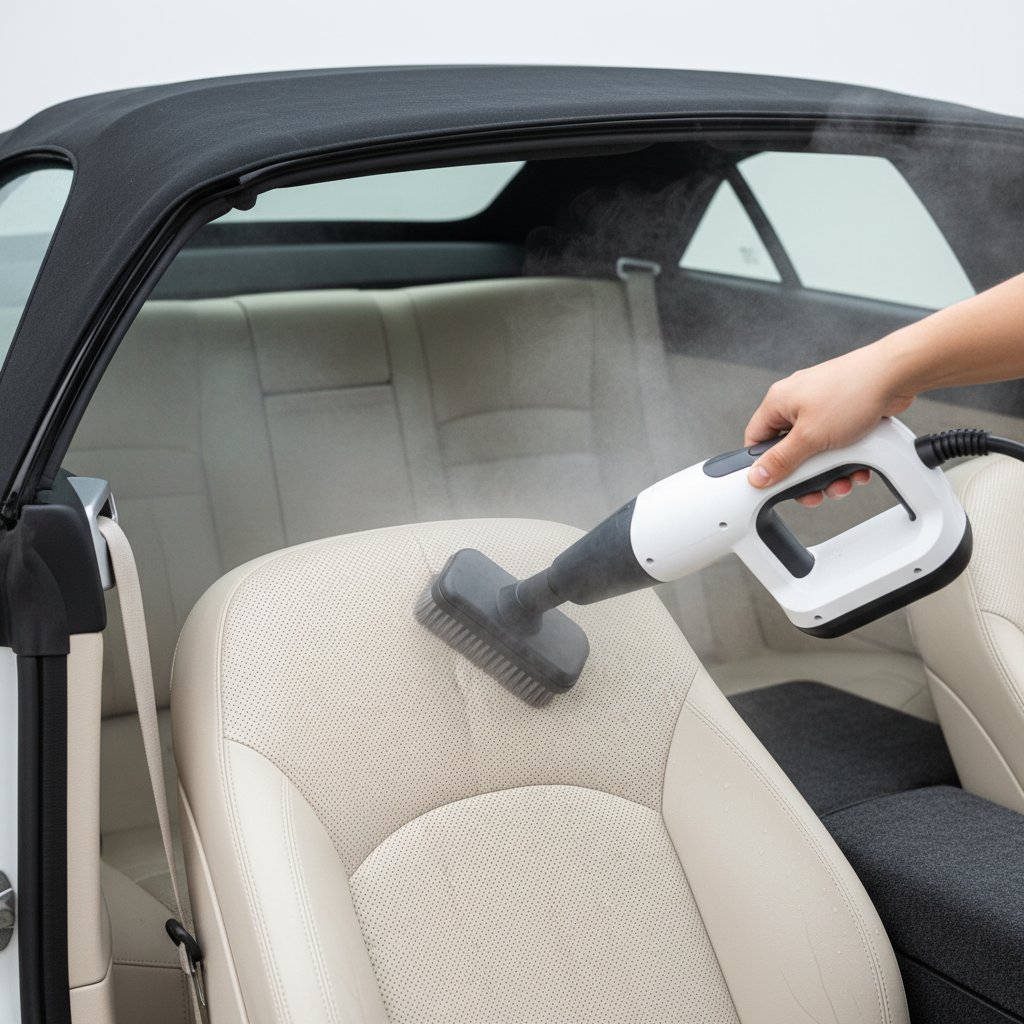
Steaming clothes can transform your daily routine, offering a quick and efficient way to remove wrinkles and refresh fabrics without the hassle of a traditional iron and ironing board. If you’ve just unboxed a new standing garment steamer, you’re likely eager to get started and experience its benefits. This comprehensive guide will walk you through the assembly process, ensuring you can set up your standing garment steamer quickly, safely, and be ready to tackle any wrinkled challenge in no time.
What is a Standing Garment Steamer?
A standing garment steamer is an appliance designed to remove wrinkles from fabrics using a continuous flow of steam. Unlike traditional irons that use heat and pressure, steamers rely on high-temperature steam to relax fibers, making them ideal for delicate materials, intricate garments, and items difficult to iron, such as drapes or upholstered furniture. Its upright design, often featuring a telescopic pole and hanger, allows you to steam clothes while they hang naturally, preventing new creases.
The primary advantage of a standing garment steamer over a traditional iron lies in its gentler approach and speed. Steamers minimize the risk of scorching or damaging delicate fabrics, making them a safer choice for silk, satin, and embellished clothing. They are also significantly faster for refreshing multiple garments or large items, eliminating the need for an ironing board and constant repositioning. This makes them a convenient tool for both daily wrinkle removal and specialized garment care.
Types of Standing Garment Steamers
Standing garment steamers come in various designs, each catering to different needs through variations in power, tank capacity, and specialized features. Understanding these distinctions can help you appreciate the specific model you have and ensure optimal assembly and usage.
By Power
The wattage of a standing garment steamer is a key indicator of its performance, primarily affecting heating speed and steam output.
- Small wattage (Under 1500W): These models typically heat up faster and are excellent for quick touch-ups or lighter fabrics. They are often more compact and portable, making them suitable for smaller living spaces or occasional use. Their gentler steam output is ideal for very delicate materials.
- Large wattage (1500W and above): High-wattage steamers offer more powerful and consistent steam, making them highly effective for heavy fabrics like denim, wool, or upholstery. They tend to have faster wrinkle removal capabilities and can handle larger volumes of clothing, ideal for frequent use or professional settings.
|
Our Picks for the Best Standing garment steamer in 2026
As an Amazon Associate I earn from qualifying purchases.
|
||
| Num | Product | Action |
|---|---|---|
| 1 | True & Tidy Heavy Duty Commercial Full Size Standing Garment Steamer for Clothes with Extra Large 3L (101 oz) Water Tank for 90+ mins of Steam Time, 1800 watts of Powerful Steam, 3 Settings, Gray |

|
| 2 | Garment Steamer for Clothes Standing, 1500W Efficient Clothes Steamer Standing with Wheels, Professional 58OZ Water Tank for Continuous Steaming, Fast Heating Wrinkle Remover |
|
| 3 | SALAV Heavy Duty Commercial Full-Size Garment Steamer with Foot Pedals and Extra Large 3L (101.5 oz) Water Tank, 1800 watts of Poweful Steam (Navy) |
|
| 4 | SALAV® Heavy Duty Smart Auto Shut-off Commercial Full-Size Garment Steamer, Beeping Alert when Water Runs out, Foot Pedal Control, XL 3L (101.5 oz) Tank, 1800 watts, 90+min of Continuous Steam, Navy |
|
| 5 | SALAV GS18 Full-Size Clothes Steamer - 1500W Power, 1.8L Water Tank, 60-Min Garment Steam, Iron Clothing, Adjustable Pole & Wheels for Easy Storage, Professional Standing Steamer for Clothes, White |
|
| 6 | SALAV GS18-DJ Standing Garment Steamer with Roll Wheels for Easy Movement, 1.8L Water Tank for 1 Hour Continuous Steaming, Adjustable Pole for Storage, Includes Descaler Packet, 1500 watts |
|
| 7 | SALAV Heavy Duty Commercial Full-Size Garment Steamer with Foot Pedals and Extra Large 3L (101.5 oz) Water Tank, 1800 watts, 90+min of Continuous Steam (White) |
|
| 8 | Pure Enrichment PureSteam XL Standing Fabric Steamer - Professional Wrinkle Remover Heats in 45 Seconds; 1/2-Gallon Tank for 1 Hour of Steaming; Easy-Roll Wheels, Garment Hanger, & Fabric Brush |
|
| 9 | Jiffy Steamer J-2000 Jiffy Garment Steamer with Plastic Steam Head, 120 Volt, Beige |
|
| 10 | Upright Steamer for Clothes 1350W Turbo Boiler Standing Garment Steamer 1.6L Water Tank 1h Continuous Steam Flat&Hanging Ironing Double Retractable Rod 10 Modes 30s Fast Preheat for all Fabrics |
|
By Tank Capacity
The water tank’s capacity directly influences the continuous steaming time, affecting convenience during extended use.
- Small tank (Under 1.5 liters): Steamers with smaller tanks are compact and lighter, perfect for travel or small loads of laundry. They require more frequent refills but offer quicker heat-up times. These are great for daily garment refreshing.
- Large tank (1.5 liters and above): Larger tanks provide extended steaming sessions, ideal for tackling numerous garments, drapes, or bedding without interruption. While they might take a bit longer to heat up, their continuous operation is a major time-saver for busy households or commercial use.
By Features
Beyond power and tank size, many standing garment steamers offer additional features that enhance their versatility and user experience.
- With dry ironing mode: While less common for dedicated standing garment steamers, some hybrid models or those with specialized attachments might offer a heated plate for a pressing effect, similar to a dry iron, useful for crisp collars or pleats.
- Without dry ironing mode: Most traditional standing garment steamers focus solely on steam, providing a gentle, non-contact method of wrinkle removal. They excel at relaxing fibers without direct pressure.
- Other features: Look for features like multiple steam settings, auto shut-off for safety, de-calcification reminders, garment brushes for lint removal, crease attachments, or even built-in ironing boards for added convenience.
Comparison Table of Popular Standing Garment Steamers
Choosing the best standing garment steamer can be daunting with so many options available. Here’s a generic comparison table to highlight typical differentiators you might encounter when evaluating models. Remember that actual specifications will vary by brand and model.
| Feature | Entry-Level Model | Mid-Range Model | Premium Model |
|---|---|---|---|
| Brand | (Generic Brand A) | (Generic Brand B) | (Generic Brand C) |
| Wattage | 1200W | 1600W | 2000W |
| Tank Capacity | 1.0 Liters | 1.8 Liters | 2.5 Liters |
| Heat-up Time | 60 seconds | 45 seconds | 30 seconds |
| Continuous Steam | 30 minutes | 50 minutes | 70 minutes |
| Steam Settings | 1 | 2-3 | 3-5+ |
| Price Range | $50 – $80 | $80 – $150 | $150 – $300+ |
| Key Features | Basic hanger | Multiple attachments, auto-off | Built-in ironing board, smart features, heavy-duty attachments |
| Ideal For | Light, occasional use | Regular household use | Frequent, heavy-duty, professional use |
Buying Guide: How to Choose the Right Standing Garment Steamer
Selecting the perfect standing garment steamer involves considering your personal needs, the types of garments you typically steam, and your budget. Making an informed decision ensures you get a powerful, durable appliance that perfectly suits your lifestyle.
Identify Your Needs
Before diving into specifications, clarify what you’ll primarily use the steamer for.
- Daily ironing: If you need quick touch-ups for work clothes or refresh everyday wear, a model with a fast heat-up time and moderate tank capacity will suffice. Portability might also be a factor for easy storage.
- Ironing large quantities: For larger households, steaming drapes, or preparing a week’s worth of outfits, a steamer with a large water tank and powerful, continuous steam output is crucial.
- Ironing different fabrics: If you handle a variety of materials, from delicate silks to sturdy linens, look for models with multiple steam settings to accommodate different fabric requirements safely. Attachments like fabric brushes or creasers can also be beneficial.
Factors to Consider
Several technical specifications and design elements contribute to a steamer’s overall performance and convenience.
- Power and heating speed: Higher wattage (e.g., 1500W+) generally means faster heat-up times and more robust steam. This is important for quick results and effectively tackling stubborn wrinkles. A steamer that heats up in under a minute is a real time-saver.
- Tank capacity and continuous ironing time: A larger water tank (1.5 to 2.5 liters) allows for longer steaming sessions without needing refills, typically providing 45-70 minutes of continuous steam. This is invaluable for extensive use.
- Steam pressure: While not always explicitly listed, higher steam pressure helps penetrate thicker fabrics more effectively. Look for models that emphasize “powerful steam” or “deep penetration.”
- Safety features: Essential safety features include automatic shut-off when the water tank is empty or if the unit overheats, and a cool-touch hose to prevent burns. A stable base is also critical to prevent tipping.
- Durability and material quality: Opt for steamers made with high-quality, heat-resistant plastics and stainless steel components for longevity. A robust telescopic pole and sturdy connections are indicators of a well-built unit.
- Brand and user reviews: Reputable brands often offer better warranty support and product reliability. Always check recent user reviews for insights into real-world performance, durability, and common issues.
“A well-chosen standing garment steamer can be a game-changer for maintaining your wardrobe. Focus on models that offer a balance of power, tank capacity, and essential safety features to truly simplify your garment care routine.” – Admin, reviewtym.com
Budget
Your budget will also influence your choices, but there are excellent options across all price points.
- Entry-level ($50 – $80): These are typically basic models with smaller tanks and lower wattage, suitable for light, occasional use or as a first steamer.
- Mid-range ($80 – $150): Offering a good balance of features, power, and tank capacity, these are often the best value for most households. They usually include various attachments and better build quality.
- Premium ($150 – $300+): High-end models boast maximum power, large tanks, advanced features like integrated ironing boards, precise steam controls, and superior durability. These are ideal for heavy users or those seeking professional results.
Top 3 Best Standing Garment Steamers (Generic Recommendations)
While specific product models constantly evolve, here are categories of highly-rated standing garment steamers that consistently deliver excellent performance for various needs.
-
The All-Rounder for Everyday Use:
- Description: This type typically features a quick 45-second heat-up time, around 1600W of power, and a 1.8-liter water tank providing 50 minutes of continuous steam. It comes with a basic set of attachments like a fabric brush and crease tool.
- Pros: Excellent for daily touch-ups, refreshing clothes, and handling a variety of common fabrics. Good balance of speed and steaming duration.
- Cons: Might struggle with very heavy upholstery or extremely large loads.
- Ideal for: Most households, individuals needing a reliable and efficient steamer for regular use.
-
The Heavy-Duty Performer:
- Description: With 2000W+ power and a 2.5-liter water tank, this category offers super-fast heat-up (under 30 seconds) and up to 70 minutes of powerful, continuous steam. Often includes multiple steam settings and specialized attachments for thicker fabrics or upholstery.
- Pros: Tackles stubborn wrinkles in heavy fabrics with ease, ideal for large quantities of clothing, drapes, and even light upholstery steaming. Highly durable build.
- Cons: Can be larger and heavier, taking up more storage space.
- Ideal for: Large families, fashion enthusiasts, small businesses, or anyone requiring professional-grade steaming capabilities.
-
The Compact & Convenient Travel/Small Space Steamer:
- Description: While often smaller, some standing models prioritize a compact footprint while still offering decent performance (e.g., 1200W, 1.0-liter tank, 30 minutes continuous steam). Designed for easy storage and portability.
- Pros: Space-saving, often lighter, and heats up quickly for essential wrinkle removal.
- Cons: Requires more frequent water refills, less powerful for very thick materials.
- Ideal for: College students, apartment dwellers, occasional users, or those who need a secondary, more portable option.
How to Assemble Your Standing Garment Steamer Quickly
Assembling your standing garment steamer doesn’t have to be a complicated task. With a clear understanding of each component and a systematic approach, you can have your new appliance ready for action in just a few minutes. Follow these simple steps for quick and safe setup.
Unboxing and Identifying Components
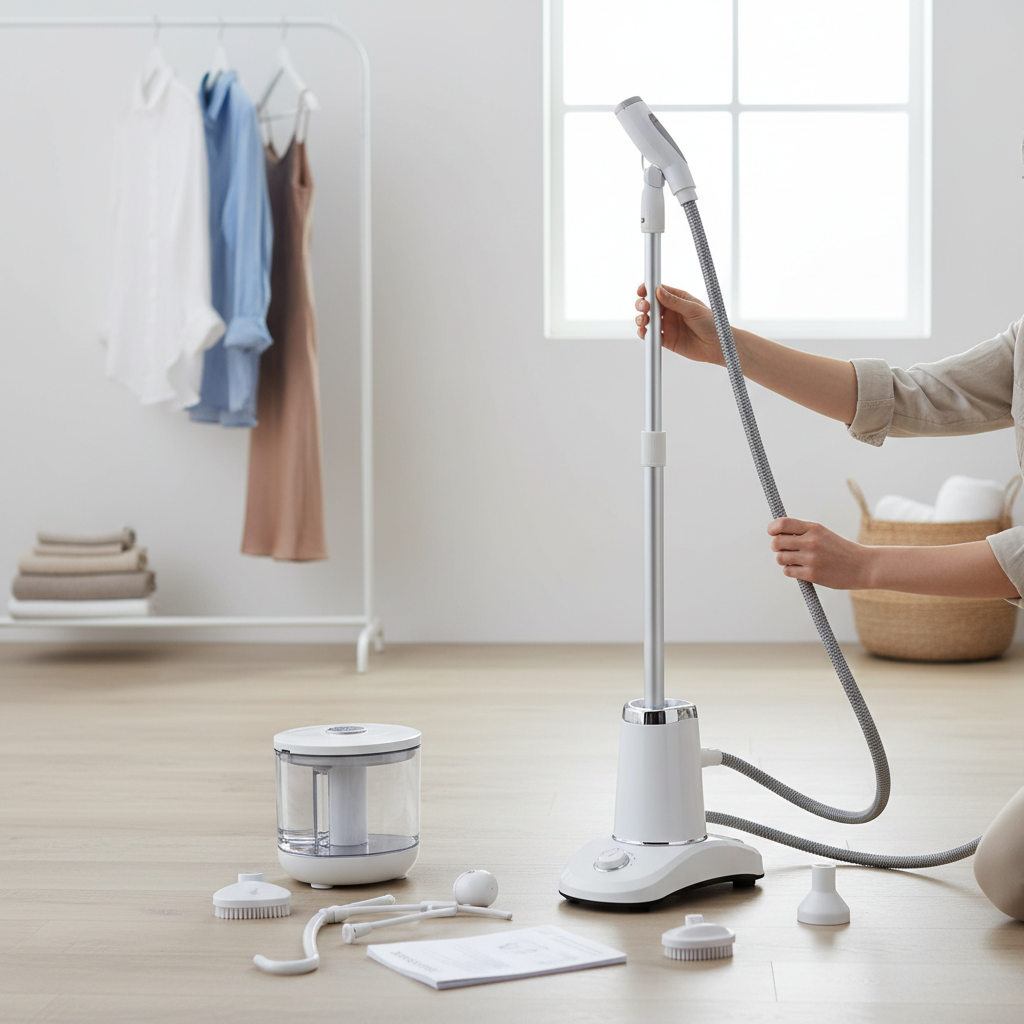
Your first step is to carefully unbox your steamer and lay out all the components. Take a moment to familiarize yourself with each part, often listed and illustrated in your user manual. Typically, you’ll find the main base unit, a water tank, several segments of telescopic poles, a steam hose with a nozzle/steamer head, a hanger or garment support, and various attachments (e.g., fabric brush, crease tool). Ensure no packaging materials are left inside any connections or the water tank.
Setting Up the Base Unit
Place the main base unit of your standing garment steamer on a flat, stable, and level surface, preferably near an electrical outlet and away from obstacles. This ensures the unit remains steady during operation. Next, locate the water tank, usually a removable reservoir, and fill it with distilled water. Distilled water is highly recommended to prevent mineral buildup, which can damage the heating element and affect steam quality over time. Once filled, securely insert the water tank back into its designated slot in the base unit.
Assembling the Telescopic Pole
The telescopic pole is central to the steamer’s functionality, providing height for hanging garments. Begin by inserting the lowest section of the pole firmly into the corresponding hole on the base unit. Many models feature a screw-in mechanism, requiring a clockwise turn to secure it, or a simple push-and-click system. If your pole comes in multiple segments (lower, middle, upper), attach them sequentially, ensuring each piece is securely connected. Look for clear indications like arrows or marked “top” and “bottom” sections, and listen for a “click” or ensure a snug fit.
Attaching the Hanger or Garment Support
Once the telescopic pole is fully assembled and securely extended, attach the garment hanger or support frame to the top. This component typically slides over the uppermost part of the pole or screws into place. Some advanced models may include an integrated ironing board or a collapsible hanger system. Ensure it’s firmly attached and stable, as it will bear the weight of your clothes during steaming. If your steamer has clips or height adjustment features, ensure they are loose before adjusting and then tightened once the desired height is achieved.
Connecting the Steam Hose and Nozzle
The steam hose is the conduit for the hot steam. Carefully connect one end of the steam hose to the designated outlet on the main base unit. This connection often involves screwing it in clockwise until it’s tight, or a secure push-and-lock mechanism. Avoid over-tightening to prevent damage. Then, attach the steamer head or nozzle to the other end of the hose. This attachment usually involves a simple click-in or slide-on method. Finally, place the steamer head into its designated holder on the garment hanger for safe storage when not in use.
Filling the Water Tank and Final Checks
Before plugging in your steamer, perform a final visual check. Ensure all poles are securely connected, the water tank is correctly inserted and filled with distilled water, and the steam hose is free from kinks or twists. Verify that the steamer head is properly seated in its holder. Once everything is in place, you can plug the unit into a grounded electrical outlet. Your standing garment steamer is now ready to power on and begin its wrinkle-fighting mission.
How to Use and Maintain a Standing Garment Steamer
Proper usage and regular maintenance are crucial for maximizing the lifespan and efficiency of your standing garment steamer. Following these guidelines will ensure safe operation and consistent performance.
Safe and Effective Usage Guide
- Read the Manual: Always consult your specific steamer’s user manual for detailed instructions and safety warnings unique to your model.
- Use Distilled Water: Always use distilled or demineralized water to prevent mineral buildup and extend the life of your appliance.
- Prepare Garments: Hang your garment securely on the steamer’s hanger. Ensure the fabric hangs freely without touching the floor or other objects.
- Heat Up: Plug in the steamer and turn it on. Allow it to fully heat up until a consistent stream of steam is emitted. This typically takes 30-60 seconds.
- Steam Method: Hold the steamer head a few inches away from the fabric, moving it up and down slowly. For stubborn wrinkles, gently press the steamer head against the fabric while pulling it taut with your other hand (use a protective glove if provided).
- Work from Top to Bottom: Start steaming from the top of the garment and work your way down.
- Be Mindful of Steam: Always keep your hands and face away from the steam to avoid burns. Use the provided heat-protective glove.
- Cool Down: After use, turn off and unplug the steamer. Allow it to cool down completely for at least 30 minutes before storing.
Regular Cleaning and Maintenance
Consistent maintenance prevents common issues and keeps your steamer performing optimally.
- Empty Water Tank: After each use, empty any remaining water from the tank to prevent stagnant water and mineral buildup.
- Decalcify Regularly: Depending on your water hardness and frequency of use, decalcify your steamer every few months. This typically involves using a mixture of white vinegar and water (refer to your manual for exact ratios and procedure). Run this solution through the steamer, then rinse thoroughly with clean water.
- Clean Exterior: Wipe down the exterior of the unit and the steam head with a damp cloth.
- Check Hose: Ensure the steam hose is free of kinks or blockages. Do not pull or twist the hose excessively.
- Store Properly: Store the steamer in a cool, dry place, ensuring the hose is coiled neatly and the unit is upright.
Common Issues and Troubleshooting
- No Steam/Low Steam:
- Check water level: Ensure the tank is full.
- Heating time: Allow sufficient time for the unit to heat up.
- Mineral buildup: Decalcify the steamer if it hasn’t been done recently.
- Kinked hose: Ensure the steam hose is straight and unblocked.
- Water Leaking:
- Overfilled tank: Do not overfill the water tank.
- Loose connections: Check that the water tank and hose connections are secure.
- Condensation: Some minor dripping is normal due to condensation in the hose, especially when starting or if the hose is held at a low angle.
- Spitting Water:
- Overfilled tank: Reduce water level.
- Mineral buildup: Decalcify the steamer.
- Not fully heated: Ensure the steamer has reached its full operating temperature before use.
Conclusion
A standing garment steamer is an invaluable addition to any home, offering a fast, gentle, and effective solution for wrinkle removal and fabric care. By following the straightforward assembly steps outlined in this guide, you can quickly set up your new appliance and start enjoying its many benefits almost immediately. Remember that proper assembly, combined with consistent usage of distilled water and regular maintenance, will ensure your standing garment steamer delivers optimal performance and a long, efficient lifespan. Are you ready to transform your garment care routine with the power of steam?
Câu Hỏi Thường Gặp
How long does it usually take to assemble a new standing garment steamer?
Most standing garment steamers can be assembled in 5 to 15 minutes. The process primarily involves attaching the telescopic pole, connecting the steam hose, and securing the garment hanger. Reading your specific model’s manual beforehand can significantly speed up the process.
Can I use tap water in my standing garment steamer?
It is strongly recommended to use distilled or demineralized water in your standing garment steamer. Tap water contains minerals that can build up inside the heating element, leading to clogging, reduced steam output, and potential damage to the appliance over time.
What should I do if my steamer isn’t producing steam after assembly?
First, ensure the water tank is correctly filled and securely in place. Then, verify that the steamer is properly plugged in and powered on, allowing sufficient time (usually 30-60 seconds) for it to heat up. Check for any kinks in the steam hose, which could block steam flow.
Is it normal for some water to drip from the steamer head?
Minor dripping, especially when you first start steaming or if the hose is bent, can be normal due to condensation within the steam hose. However, excessive or continuous leaking may indicate an overfilled water tank, loose connections, or a need for decalcification.
How do I store my standing garment steamer when not in use?
After ensuring the steamer has cooled down completely and the water tank is emptied, store your standing garment steamer upright in a cool, dry place. Make sure the steam hose is coiled neatly without kinks and the steamer head is placed in its designated holder.